
How do you tell your business story on TikTok to attract customers?
Start with a person, a problem, or a real moment of work, then show what your business changes. A clear, useful story gives viewers a reason to watch before you ask them to buy.
· 6 min read
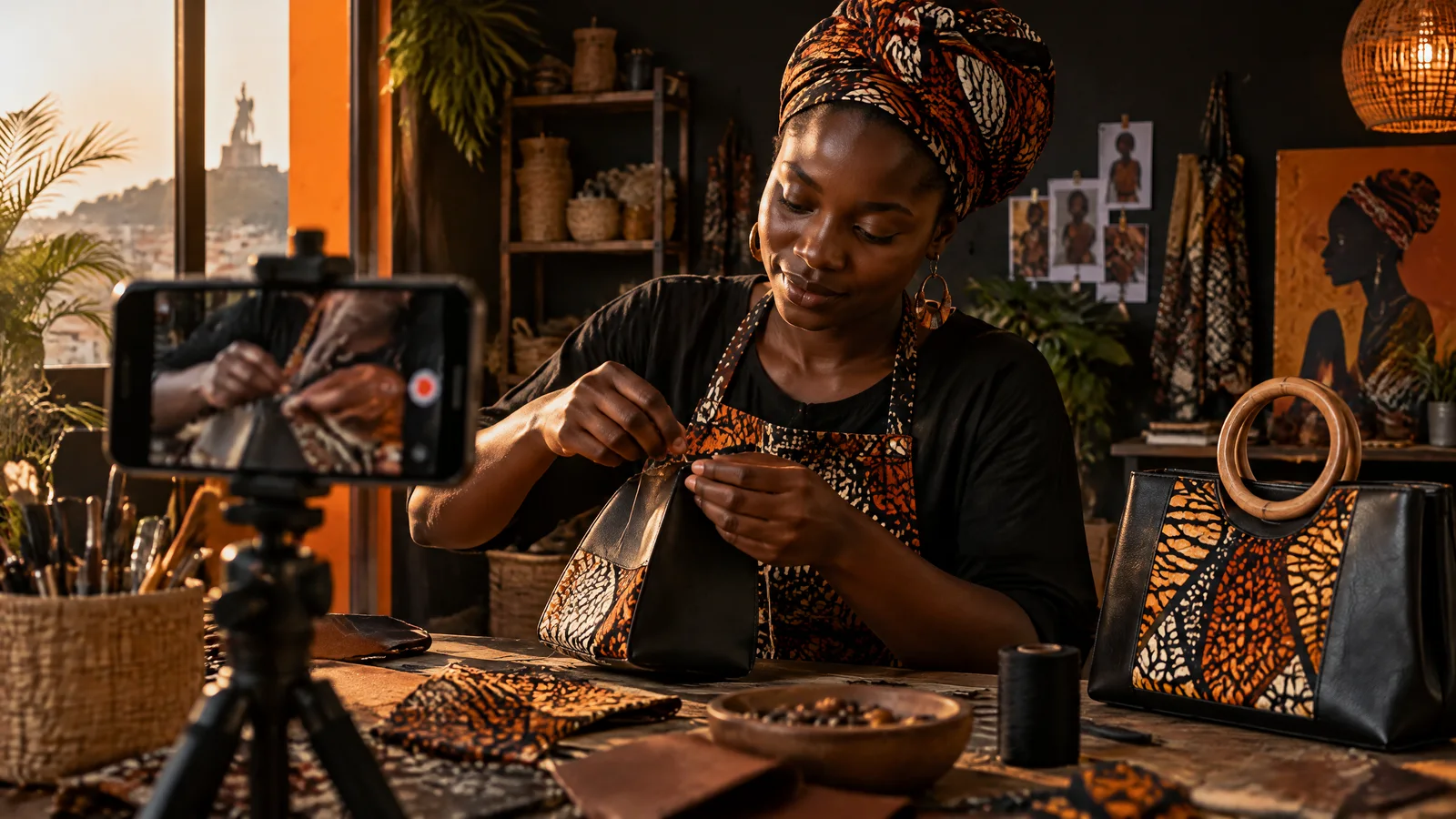
You don’t need a dramatic founder story to make TikTok videos about your business. Start with a person, a problem, or a real moment of work, then show what you do and why it matters. The goal isn’t to recite your company history. It’s to help someone stop scrolling, understand your offer, and recognize a situation they care about.
What should you tell if your business story feels ordinary?
Choose one real detail you can show. A product brand might show a step in making an item or a way someone uses it. A SaaS or app founder could start with a problem they faced, the search for a solution, or a task their product makes easier. A shop could share a common customer question or a decision made while preparing an order.
One video doesn’t have to tell the whole story of your business. Pick a single entry point and connect it to what you offer. A simple story can follow this path:
- The situation: What was happening before your product or service?
- The problem: What felt difficult, frustrating, or inconvenient?
- Your response: What did you make, change, or decide?
- The value: What can the customer do or experience as a result?
Be specific. “I built an innovative solution” gives viewers neither a situation nor a solution to picture. A scene showing the problem and how your offer responds gives them something to understand. You can also explain why you chose a material, method, or feature—but connect that choice to a benefit people can grasp.
How do you earn attention at the start?
Open with the image or line that makes the subject immediately clear. TikTok’s small-business advertising guide recommends catching attention in the first three seconds, for instance by showing a product in action, asking a question, or revealing a transformation (TikTok’s guide). You can borrow that storytelling principle for organic videos without making them sound like ads.
Instead of starting with a long introduction, test an opening that puts the point on screen right away:
- Show the result before explaining how you get there.
- Ask a question your customer might genuinely ask.
- Show a surprising or satisfying step in how you make the product.
- Start with a specific challenge and tell viewers you’ll show how you address it.
Write a short hook and say it out loud. If it could work for almost any business, add a detail that belongs to yours. Don’t promise a transformation that the video doesn’t demonstrate. Your opening should set up a question the rest of the video answers—not grab attention and then move on to something unrelated.
How do you explain benefits instead of listing features?
A feature describes what your offer includes. A benefit helps someone see what it changes in a real situation. TikTok recommends showing before-and-after situations and people using a product in daily life, rather than only listing features (TikTok’s video recommendations).
For an app, don’t just name a function. Show the task someone faces, how they use the app, and what they can do next. For a physical product, show it being used instead of only presenting it to camera. For a service, illustrate a representative situation and explain who it is for.
Build a video around this sequence:
- Before: Introduce a specific problem or need.
- During: Show your product, process, or service in action.
- After: Explain what becomes easier, clearer, or more enjoyable.
- Next step: Invite viewers to ask a question, watch another video, or explore your offer.
Avoid broad claims such as “the best experience.” Tie each promise to something viewers can see or hear. If you can’t show the benefit, describe a real situation where it matters—without claiming that your offer is right for everyone.
How can you share the people and work behind the business?
The people doing the work can be part of your story: the person designing, making, advising, packing, or answering customers. That doesn’t mean you have to reveal everything or speak to camera in every video. Your hands, voice, screen recording, or response to a question can make a video feel specific to your business.
Shopify reports that the founder of Partly Sunny Projects grew her TikTok audience with direct plant advice, humor, and answers to community questions, rather than content focused only on selling (Partly Sunny Projects’ story). Take inspiration from the approach by collecting questions customers already ask. Answer one question per video, show an example, and connect the answer to your product or expertise when it makes sense.
Not every video needs to lead directly to a sale. A useful tip, an explanation of your process, or an honest response to a concern can help someone understand what your business is about. But don’t force every anecdote into a pitch. Share it because it illuminates a need, a decision, or the way you work.
How do you turn one idea into a repeatable series?
One video can’t cover every side of your business. Choose a few recurring angles that you can return to without having to invent a grand new story each time:
- The problem: A difficulty your business helps address.
- The process: A step in making, preparing, or delivering your offer.
- The question: A clear answer to something customers often ask.
- The person: A decision, mistake, or lesson from your work.
- The use case: A demonstration in an everyday situation.
Treat each video as a standalone episode: a viewer should understand it without having seen the others. Keep a note of customer questions and moments from your work that are easy to film. Then draft a few opening lines and choose the one that most clearly signals the subject. A series doesn’t require a particular posting schedule; it simply gives you a starting point for your next idea.
Platform case studies can offer ideas, but they aren’t promises of what will happen for your business. TikTok says In Blue Handmade promoted organic videos that were already performing well, including making-process clips, and then received views and landing-page visits through Promote. That’s an example of boosting content that had already shown promise—not a guarantee that the same approach will produce the same results for you (In Blue Handmade case study).
How can you tell whether your story is attracting the right people?
Don’t judge a video only by its view count. Ask whether people understand what you offer and whether the video leads them toward an action that matters to your business. Read the comments and questions: they may point to confusion, an objection, or a useful next topic. If you can measure visits or sign-ups, look at which videos bring people there.
This week, choose a real customer question and film an answer that shows your offer in context. Then make a second video based on a question or reaction prompted by the first. If you want to adapt one idea into different formats, Firemarket can generate editable hooks and captions, UGC-style videos with AI voices and characters, and carousels. Its reports can help you compare which topics and formats attract your audience; they don’t make any format a guaranteed winner. Get started for free.
Sources
The pages we read to write this post.
- Video Advertising Guide for Small Businesses — TikTok for Business · ads.tiktok.com
- In Blue Handmade — TikTok for Business · ads.tiktok.com
- Plant Business: How TikTok Helped One Founder Grow — Shopify · shopify.com
- How RMS Beauty Grew Makeup Sales With Founder-led Storytelling — TikTok Business · ads.tiktok.com
- A local candle company found a national audience on TikTok — TikTok Economic Impact · tiktokeconomicimpact.com
- Introducing Best Practices, an Education Hub for Creators on Instagram — Meta · about.fb.com
- Oxford Economics Reports: SMB's use of TikTok Contributed $24.2 Billion to U.S. Economy in 2023 — TikTok Newsroom · newsroom.tiktok.com